What Is the Difference Between Yoga and Power Yoga?

tx6fe

Traditional Yoga vs. Power Yoga

Well, I guess I’m the best person to answer this question, considering I grew up from age 15 in Traditional yoga. By Traditional yoga, I mean a vinyasa yoga practice I studied in India called Ashtanga yoga. I am also the person who coined the term “Power Yoga.“

The difference between the two is nothing and/or everything. Let me explain. In India, most of the yoga practices are not physical, so right there you could say there are many differences between Power Yoga and most yoga practices.

So, what’s the point of yoga?

The goal of yoga is enlightenment, so you could also say that anything that leads to enlightenment is a yoga practice. Yes, Power Yoga leads to enlightenment, so then you could say there is no difference.

What is Power Yoga and How Do You Do It?

The objective of Power Yoga is to strengthen the benevolent and eradicate the malevolent.

To do this, we have to become aware of our mental state or the places our minds dwell, and with this awareness, we can decide if we want to dwell in the place our mind is dwelling or not. This choice gives us the opportunity to empower or disempower the mind states that benefit (benevolent) us or hinder (malevolent) us. I feel from my own experience, this is aligned with the objective of all yoga, so in that, there is no difference.

To do all this, we take a unique path. Yet if you could understand the thousands of different ways yoga is expressed in India and throughout the world, you could even say taking a unique path is not unique. I feel ultimately a yoga student learns yoga in the style of their instructor, whether it’s poses or exercises or meditations etc. After learning and experiencing this core yoga, the student should then personalize the practice to fit most optimally their uniqueness, so when and if this student one day becomes an instructor, the yoga they share will be what they learned from their instructor, personalized to fit them. This is what I have done. This means this yoga has now changed to some degree and this yoga has evolved over the last few thousand years. Power Yoga is a by-product of this evolution. So in some ways, it’s unique in the sense it is Bryan Kest’s or any of the myriad of instructors who copied this name.

And in some ways, it is not unique at all. So this is what Power Yoga is and how we do it; you have to take a class and see.

One last thing is that Power Yoga is not a style or system of yoga like so many other styles and systems of yoga. There is no consistency in Power Yoga classes throughout the world. It’s basically a cool or stupid name, depending on your opinion, that anybody can use to describe their class and those classes vary greatly. So keep an open mind when attending a Power Yoga class, because you cannot be sure of what you will get, although most of them seem to be physically rigorous like vinyasa flow yoga. I have even heard of a meditation class called Power Yoga.

[……]

Read more

Did You Know Of These Benefits Of Power Yoga?

The words ‘power yoga’ refers to a robust, fitness-based approach to vinyasa-style yoga and it has many benefits for the human body. Though many people dismiss power yoga as ‘gym yoga’, it was based on the Ashtanga method at its inception.

With its emphasis on strength and flexibility, power yoga is a type of yoga that focuses on increasing muscle strength and endurance. The poses are difficult, and you move swiftly from one to the next.

It’s a good physical workout, and unlike some other types of yoga, where the same series of positions are repeated every time, power yoga lessons are rarely the same.

What Is Power Yoga Exactly?

mptsh

Power yoga is described as a type of Vinyasa yoga, which has its origins in Ashtanga yoga, a well-established practise that dates back to the early twentieth century.

Rather than treating each position individually, power yoga focuses on the flow from one to the next and that yields many benefits for the human body. Unlike some other types of yoga, the poses aren’t separated from one another. It is a high-intensity, fast-paced workout which requires shifting from one position to the next quickly while syncing your breathing to your body’s various motions.

Power yoga is more energetic than meditative, even though it demands mindfulness and attention to your breathing.

1. Keeps Your Heart Healthy

wqedk

Increasing your heart rate during exercise allows your body to better circulate blood and oxygen to your muscles and organs. As a result, your fitness, stamina, and overall health may increase along with controlling blood and sugar levels, aiding weight loss and reducing the risk of chronic conditions like stroke and diabetes.

2. Builds Strength

5of5g

When you hold a pose for more than a few seconds, your muscles are pumped up and forced to work harder to keep you in the position. This can help you gain muscle strength and endurance in a variety of areas across your body.

3. Reduces Stress

ov0it

Despite the fact that power yoga is less meditative and more fast-paced than other styles of yoga, a 2017 study indicated that it can lower cortisol, the stress hormone, in the body.

Power Yoga: How To Get Started?

z9kwn

Typically, power yoga courses are conducted at fitness centers or yoga studios. Look for basic or introductory lessons when you start out. These classes are likely to be referred to as Vinyasa yoga classes as well.

Before signing up for a power yoga session, speak with the instructor or other employees at the fitness facility or studio to learn more about the program and what it entails. Find out what level of knowledge or fitness is required for the class as well.

If you’re new to yoga, you might wish to start with a Hatha yoga introduction session. This will help you become more familiar with a range of yoga poses and how to properly perform them.

Power Yoga Poses

Some power yoga poses one can try are:

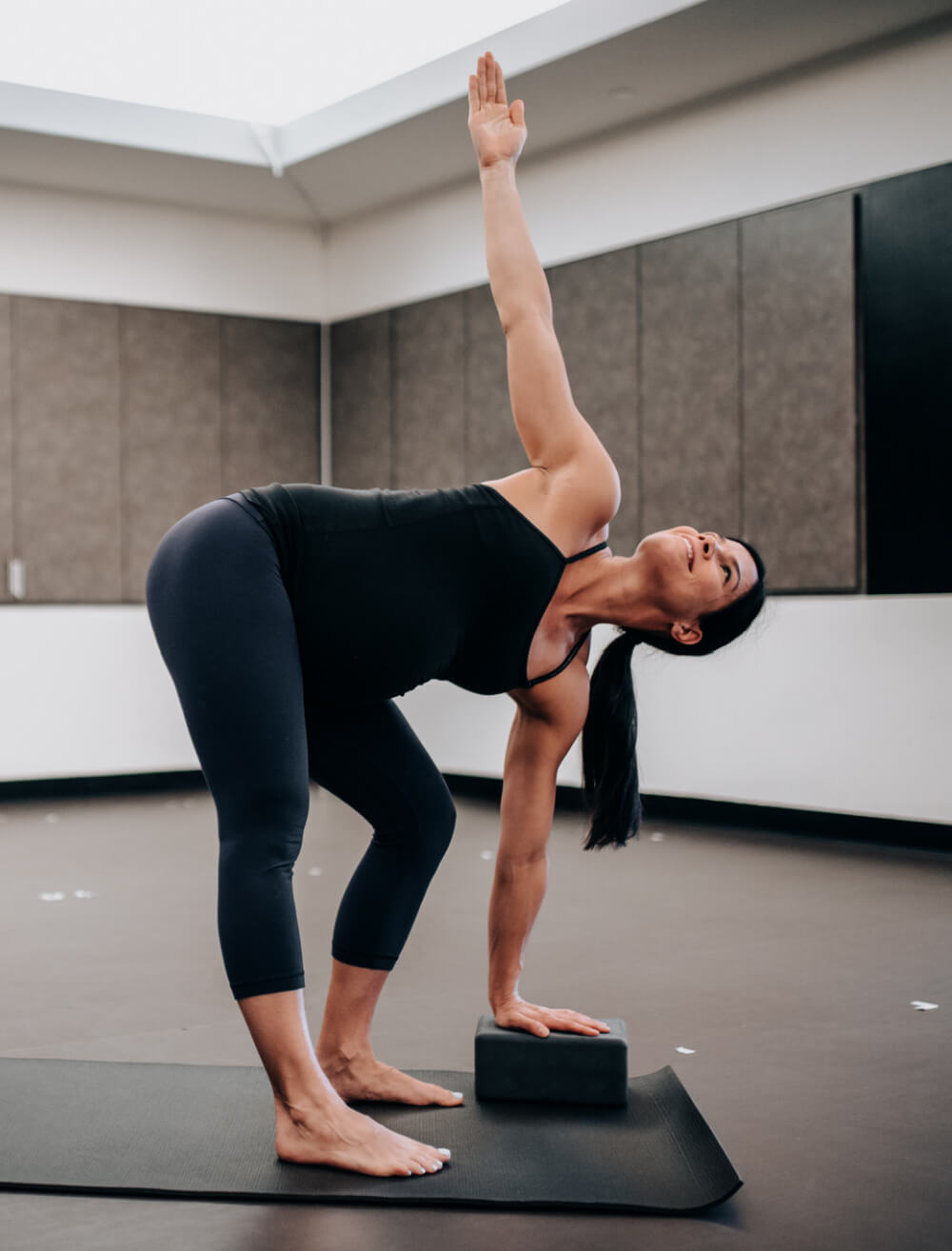
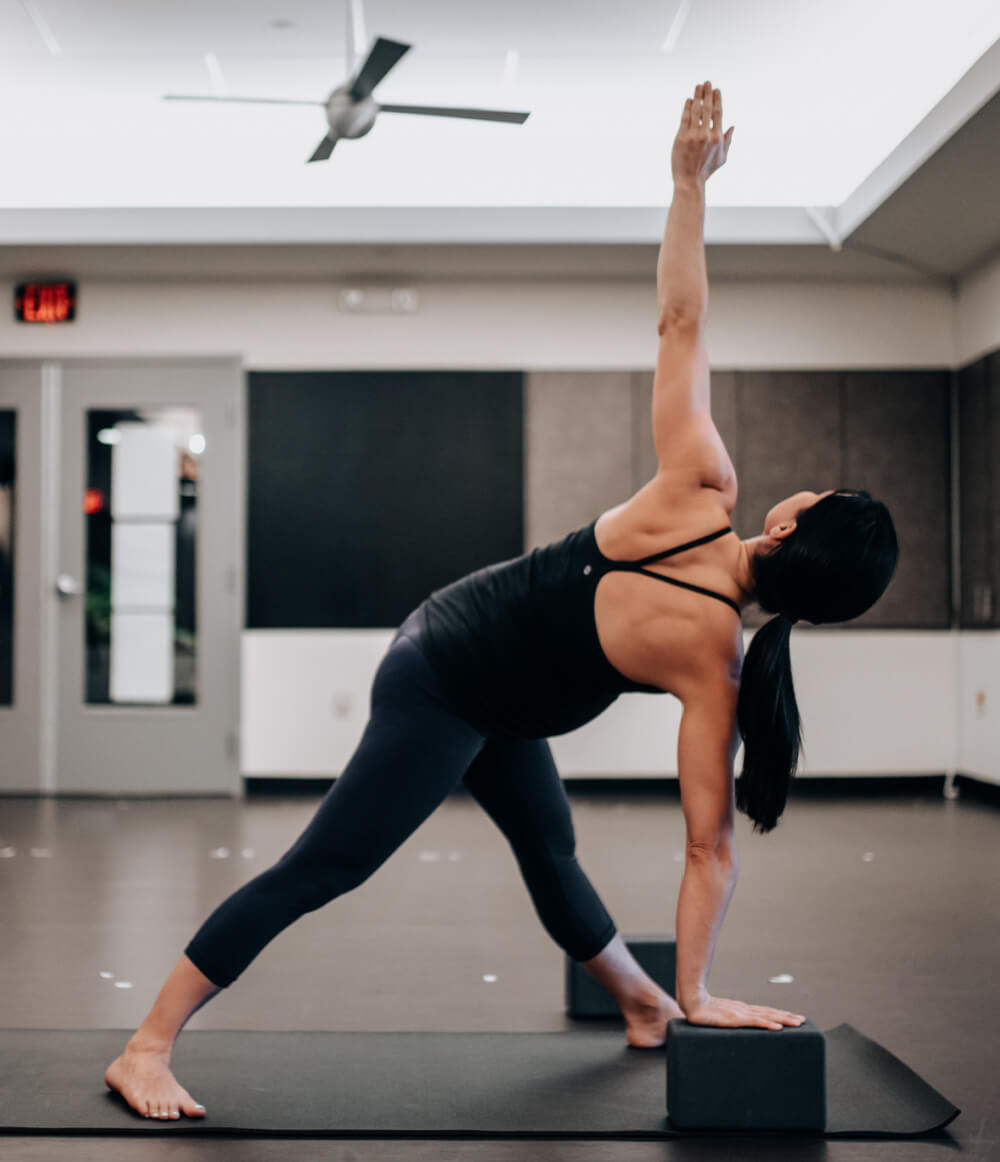
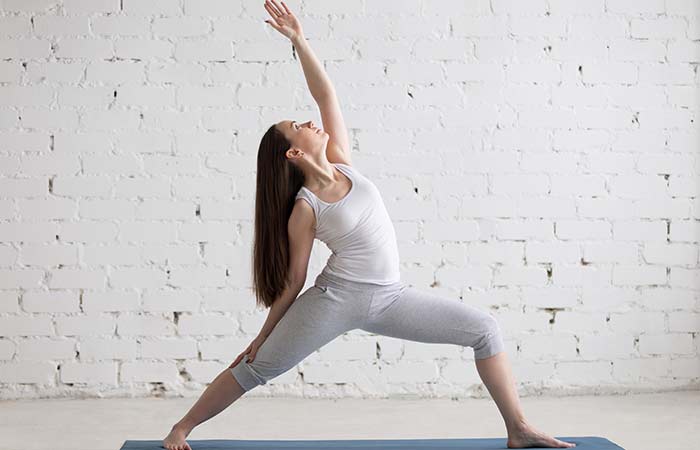
Ardha Chandrasana (Half Moon Pose)

va873

Named after the shape of a half-moon, it’s a yoga asana for beginners which makes your legs, buttocks, and spine stronger. It expands your hips, extends your hamstrings and improves balance and coordination.

TIP: Practice this pose on an empty stomach in the morning or four to six hours after a meal during the evening for 15 to 30 seconds.

Salabhasana (Locust Pose)

i00u9

Salabhasana, or the Locust Pose, is a grasshopper-like backbend. It strengthens your upper and lowers back muscles. It strengthens your arms and increases your body’s endurance, while soothing anxiety and calming your brain.

TIP: This pose too should be practiced either in the morning or four to six hours after a meal.

Chaturanga Dandasana (Plank Pose)

sc5gr

Chaturanga Dandasana is also known as the Plank Pose or four-limbed pose as the asana requires the support of all four limbs. It strengthens your arms, legs, and wrists and improves your core stability. It also invigorates your mind and body while increasing your stamina.

TIP: Practice this pose on an empty stomach.

Difference Between Yoga and Power Yoga

53xpg

Power yoga moves at a considerably faster speed than traditional yoga.

Power yoga focuses on poses and breathing at a faster, more purposeful speed. Yoga focuses on poses and breathing at a slower, more deliberate pace.

Yoga’s slower pace and other styles that provide a more restorative experience do not provide the same cardiovascular advantages as power yoga.

Power yoga emphasizes transitioning from one pose to the next while exhaling as you do so. Yoga is more concerned with achieving the proper posture with each pose than with the flow of poses.

TIP: It is highly important to take care of your dental and physical hygiene before attending a power yoga class.

When To Avoid Power Yoga

Power yoga should be avoided when:

You’re not in great shape. Power yoga, at the very least, necessitates a moderate level of fitness; otherwise, the physically demanding asanas (poses) might cause more harm than benefit.

You’re expecting a child. During pregnancy, certain asanas have the potential to create difficulties. (Instead, consider mild prenatal yoga courses made just for pregnant people.)

You have a long-term physical illness like diabetes or arthritis.

TIP: Consult a healthcare expert before signing up for power yoga classes.

Benefits Of Power Yoga: FAQs

Q. What is the difference between yoga and power yoga?

j97e5

A. The speed of practice is one of the key differences between yoga and power yoga. When practicing yoga, you should take it slowly and move the body parts with caution, all while maintaining a constant flow and a structured rhythm.

Power yoga, on the other hand, is completed in a shorter amount of time than traditional yoga. Even power yoga follows a rhythmical exercise flow that is regulated and consistent. It is done quickly, with body components moving at a faster pace to improve physical fitness.

Q. Is power yoga good for beginners?

8n4f9

A. Yes. When a loving, competent, and informed teacher leads the class, power yoga is safe for beginners. Additionally, if fitness clubs and studios really desire them, personalized power yoga courses for students with heart conditions, diabetes, or who want to lose weight can also be arranged.

Q. Can I do power yoga every day?

dhr33

A. Yes, you certainly can. If you combine daily power yoga with a healthy diet, you’ll be in great condition in no time. Make sure you don’t overdo it. If you’re feeling exhausted or worn out, take a day off and do something interesting and easy like walking, riding, dancing, or whatever you prefer.

Q. Is power yoga better than going to the gym?

q5osn

A. One of the best aspects of yoga is that it can be done anywhere and at any time. It can be done without any equipment at home, outside, or in small spaces, but a gym workout requires adequate equipment, accessories, and more space. Yoga is also appropriate for people of all ages. People above the age of 65, as well as those with high blood pressure or cardiac problems, should avoid going to the gym.

[……]

Read more

The Incredible Bond Between Power Yoga And Weight Loss

Strengthen your core and build lean muscles with this fast-paced cardio workout.

Reviewed by Sri Yogi Anand, Registered Yoga Teacher

Written by Shirin Mehdi, BA

Edited by Arshiya Syeda, BA (Literature & Psychology), PG Diploma

Fact-checked by Himanshi Mahajan, BSc (Life Sciences), Certified Health & Nutrition Life Coach • Mar 8, 2024

6qco6

Power yoga is different from the traditional yoga postures you usually come across or do at home. It is much like a cardio workout. So, is power yoga for weight loss an option worth trying? If yes, how does it help shed some pounds? And how do you plan your session for it to be weight loss-friendly? In this article, we answer all your questions and dig deeper into power yoga, its overall benefits apart from weight loss, and when not to practice it. So, let’s get started to get your body in shape!

What Is Power Yoga?

A Vinyasa practice, Power Yoga is a fitness-based workout that promotes wellness of both body and mind. It finds its roots in the Ashtanga branch of yoga and shares common qualities and benefits. Much like Ashtanga Yoga, when you practice Power Yoga, your body builds internal heat and increases your stamina and endurance, and promotes better breathing. With regular practice, you become strong, flexible, and stress-free.

Power Yoga is becoming increasingly popular around the world. It gives your whole body a good workout. It is, of course, strength building, and also includes the properties of a good aerobics or cardio session.

Power Yoga is a modern form of yoga that is a good fusion of the traditional values of yoga with the need of the hour – fitness and weight loss. Therefore, this is a very upbeat form of yoga, which makes it interesting and more sought after. Yoga of this kind suffices the need of those who feel that they have had a good workout only if they have profusely sweated.

The Benefits Of Power Yoga

0ahxj

Power Yoga has all the benefits of a usual yoga workout and more. These are some spectacular benefits of this kind of yoga.

Report Ad

It helps burn out a fair amount of calories.

It builds strength, stamina, and flexibility and tones the core and the body.

Power Yoga gives your metabolism a boost.

You become more focused.

Stress and tension are considerably reduced. You become calm and relaxed.

Even the inactive muscles are toned, flexed, and strengthened.

Here are a few power yoga poses for you to begin with.

Power Yoga Poses For Beginners

1. Child’s Pose

How To Do

Kneel with your knees hip-width apart, feet together behind you, and your butt resting on your feet.

Inhale deeply, then exhale as you lower your upper body over your thighs.

Rest your forehead on the ground and extend your arms in front of you.

Maintain this position for at least five breaths.

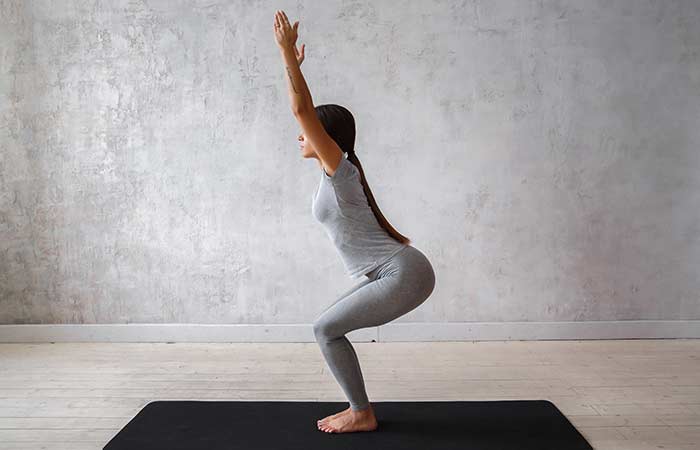
2. Chair Pose

How To Do

Stand tall, feet a bit wider than hip-width apart, and arms hanging by your sides.

Raise your arms and extend your wrists and fingers.

Ensure your shoulders are relaxed and your back is straight.

Bend your knees and keep them parallel, leaning forward to form a right angle with your thighs.

Keep your head, neck, and arms aligned with your torso.

Maintain this position for 30 seconds to 1 minute.

While these poses are beneficial, there may be times you should not follow them.

Related: 12 Yoga Exercises For Slimming Your Face

When Not To Practice Power Yoga

eaw8e

The stream of yoga you choose to practice depends on what your aim is. If you want to get rid of pain and are looking for a healing practice, then no, this form of yoga is not for you.

Report Ad

Also, it is best to avoid Power Yoga, or do it under supervision or with a doctor’s permission, if you are:

a. Pregnant

b. Suffer from serious injuries

c. Have had a recent surgery

d. Have a serious disease or disorder

Related: What Are The Differences Between Yoga And Aerobic Exercises?

Power Yoga Vs. Cardio

0svyt

Let’s be honest. If you do an intense hour-long session of cardio, you will lose twice the number of calories as compared to how much you will lose with Power Yoga. However, Power Yoga feeds the muscles. It works on the core and streamlines your body, building the core muscles. Building lean muscles is effective for weight loss and increasing metabolism, which means burning a considerable amount of fat.

You do burn calories in a cardio session, but it doesn’t necessarily mean you burn fat. Also, excessive cardio can deplete the muscle reserve, and this is not ideal for a long-term weight loss plan.

[……]

Read more

Swap from Yang-focused power yoga to Yin Yoga

bw2zb

Yin and Sound is the perfect combination of healing instruments like Tibetan singing bowls, Koshi, Kalimba etc and longer holds of relaxing asanas to get into the deep fascias and release (emotional) tension without body and mind.

Many people use yoga as a workout tool to heat up, power out and sweat. And that’s what a yang-focused practice is. It is any type of Vinyasa, Hatha, Ashtanga practice, that increases our yang energy within our body. These practices keep our heart rate up through dynamic movement, strong flows and challenging asanas.

In a world where we constantly have stimuli from the outside, keeping our minds busy 24/7, we tend to have too much energy and/or be tired at the same time. But at some point, we need to process all the information that we are continuously gathering. Our body and mind are in constant fight or flight – our sympathetic nervous system – if we do not give it time to rest. The sympathetic nervous system is turned on in dangerous situations and helps us to survive. It is our flight or fight mode, where stress hormones like cortisol and noradrenaline are released. The parasympathetic nervous system regulates all important processes responsible for detox, cell renewal, and digestion. It’s our rest and digest mode.

Evolutionary this makes a lot of sense. Back in the days when we lived in the jungle/forest and the ‘only’ stress factors or dangers we had were wild animals like venomous snakes or bears, and our body needed to turn in the sympathetic nervous system in order to survive. Our sympathetic nervous system is stimulated for the duration of the danger, which could have lasted 10-30 minutes (more or less). Afterwards, we directly came back to rest and digest. Today our stress factors are much different, but the reaction from our body stays the same. Our nervous system does not know the difference. Today, we barely relax. Regular stress factors like pressure from the outside world, job, loved ones, etc. keep our fight or flight mode turned on as these factors don’t just vanish, which in reverse hinders our system from working properly and keeping relevant processes alive.

Yin Yoga teaches us to be more aware of our body as it is a feminine, more passive way of doing yoga asana practice. Mentally, we are taught to be fully present and accept our body where it is right at that moment. Due to the long duration of holds, we are forced to not go 100% into a posture, but stay at around 70% to prevent injuries. Our mind has time to calm down, taking us into rest and digest, our parasympathetic nervous system.

Holding poses for up to 7 minutes, but at least longer than 90 seconds triggers the production of collagen fibres, elastin and hyaluronic acid in our fasciae. This strengthens and lengthens the deep tissues and makes our body more mobile, flexible and increases the range of motion. As well as this, we have connective tissue within our body. As the name says connecting or glueing together our muscles, tendons, bones, organs, skin etc. and gives them stability. If these tissues are not properly used and stretched, they become stiff, which makes our body more prone to injuries through sudden falls or shocks. Our blood and water circulation is supported and thus the removal of excess toxins. Oxygen is transported into our cells and cells can be renewed.

How does Yin Yoga help with emotions and triggers?

It gives you time and space to allow emotions, thoughts and feelings you have kept in the shadows, to surface. During the practice, you are able to observe and release the emotions and feelings that come up without getting caught up in their story. In combination with sound, we can completely relax into a present state of mind.

trmtc

6 benefits of Tibetan singing bowls

Soothing and relaxing effect on mind and body through lowering of blood pressure (studies show within 12 minutes of listening)

Regeneration of muscles

Release pain and tension in joints and muscles for improved sleep

Connects frequencies of body, mind and soul for a more centred and calm nervous system

Each bowl is connected to one of the seven chakras through their frequency created by their individual compositions of metals

As with Solfeggio frequencies, Tibetan singing bowls produce beneficial changes in brain waves leading to a stimulated immune system

Combined with Yin Yoga our body can completely focus on resting and repairing. And we can take long-needed breaks from all the thoughts and thought patterns keeping us up at night.

The best part: you will receive all the benefits of meditation without meditating in complete silence.

[……]

Read more

Book Bolt Software