kundalini Yoga – 10 Benefits of Kundalini Yoga

3j99x

Kundalini yoga is a form of yoga that focuses on spiritual awakening, self-awareness, and physical health. It incorporates a combination of physical postures, breathing exercises, chanting, and meditation to create a comprehensive practice that addresses the needs of the body, mind, and soul. Kundalini yoga is an ancient practice that has been passed down for generations, and its benefits have been experienced by people of all ages and backgrounds.

What is kundalini meditation?

Kundalini meditation is a type of meditation that is designed to awaken the Kundalini energy that lies dormant at the base of the spine. The Kundalini energy is believed to be a powerful source of spiritual energy that can bring about profound transformation and enlightenment.

During a Kundalini meditation practice, individuals typically sit in a comfortable position and focus on their breath or a specific mantra. The intention is to quiet the mind and bring awareness to the body, allowing the Kundalini energy to rise up through the chakras.

There are many different types of Kundalini meditations, each with its own specific focus and intention. Some examples include:

Breath-focused meditation: This type of meditation involves focusing on the breath and using specific breathing techniques to help awaken the Kundalini energy.

Mantra meditation: Mantra meditation involves repeating a specific mantra, such as “Sat Nam” or “Om,” to help calm the mind and activate the Kundalini energy.

Chakra meditation: Chakra meditation involves focusing on each of the seven chakras and visualizing the Kundalini energy rising up through each one.

Visualization meditation: Visualization meditation involves using the power of the mind to visualize the Kundalini energy rising up through the body.

The benefits of Kundalini meditation are similar to those of other meditation practices, including reduced stress, increased focus, and a greater sense of inner peace. However, Kundalini meditation is believed to be a particularly powerful tool for spiritual growth and transformation.

It’s important to note that Kundalini meditation should be practiced under the guidance of a qualified teacher, as it can be a very powerful and transformative practice that requires proper technique and guidance.

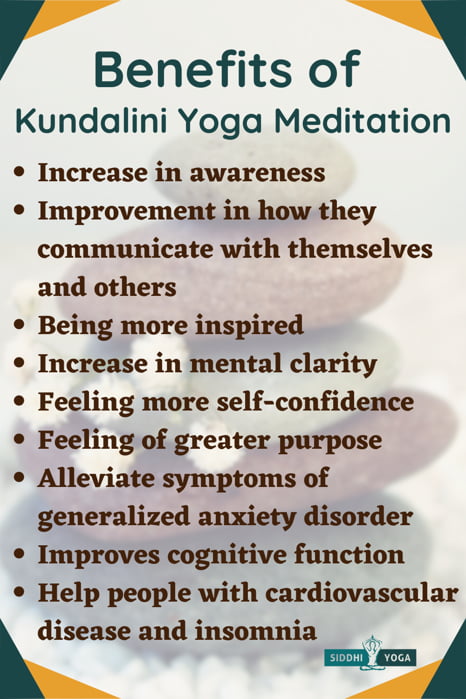
Benefits of Kundalini Yoga:

Promotes Physical Health: Kundalini yoga strengthens the body, increases flexibility, and improves overall physical health. It can also help alleviate chronic pain and reduce the risk of injuries.

Reduces Stress and Anxiety: Kundalini yoga helps to reduce stress and anxiety by calming the mind and relaxing the body. Its emphasis on breathing exercises and meditation can help to lower cortisol levels, the hormone responsible for stress.

Enhances Mental Clarity: Kundalini yoga is a powerful tool for enhancing mental clarity and focus. Regular practice can improve cognitive function, memory, and decision-making abilities.

Boosts Energy Levels: Kundalini yoga helps to increase energy levels by activating the body’s natural energy centers. This can help to combat fatigue and improve overall vitality.

Improves Emotional Wellbeing: Kundalini yoga can help to improve emotional well-being by releasing negative emotions and promoting feelings of peace and joy.

Strengthens Immune System: Kundalini yoga has been shown to boost the immune system by increasing the production of white blood cells and reducing inflammation in the body.

Enhances Spiritual Growth: Kundalini yoga is a spiritual practice that can help individuals to connect with their inner selves and develop a deeper understanding of the universe. Regular practice can help to awaken the Kundalini energy and bring about spiritual growth.

Experience Holistic Well-being: The holistic nature of Kundalini Yoga addresses not only the physical body but also the mind and spirit. Through a combination of dynamic postures, breathwork, meditation, and mantra chanting, you’ll cultivate a sense of balance and well-being.

Awaken Your Inner Potential: This practice can lead to heightened states of consciousness and personal growth.

Enhance Vitality: Kundalini Yoga’s unique techniques can boost your energy levels, improve circulation, and strengthen your nervous and immune systems. This can result in increased vitality and resilience.

[……]

Read more

How does Kundalini Yoga work?

7gcac

For the most part, Kundalini Yoga is practiced with the eyes closed. Rhythmic movements, co-ordinated with the breath, are interspersed with rest periods and self observation. As self-awareness increases, the mind begins to drop it’s constant chatter, the nervous system changes gears and this stimulates an endocrine response.

The cascade of electrical impulses and hormone messages triggers the brain to switch from Beta, stress response brain waves, to healing Alpha and even Theta brain waves. Within this state of mind, one becomes present. The mind becomes clear, relaxed and focused and states of deep inner wisdom and peace become the norm.

What are The Benefits from this Yoga?

Helps to reduce anxiety and depression

Improves mental health and feelings of wellbeing

Helps to promote a positive self image

Increases emotional awareness and helps one process negative emotions and experiences

Reduces overwhelm and promotes resilience

Balances the nervous system to promote healthy sleep and improve energy levels

Balances the endocrine system and regulates hormones

Improves mental clarity, focus and cognition

Promotes a strong sense of self, promotes healthy decision making and boundaries

Improves general health, fitness and vitality and reduces pain

Who can practice it?

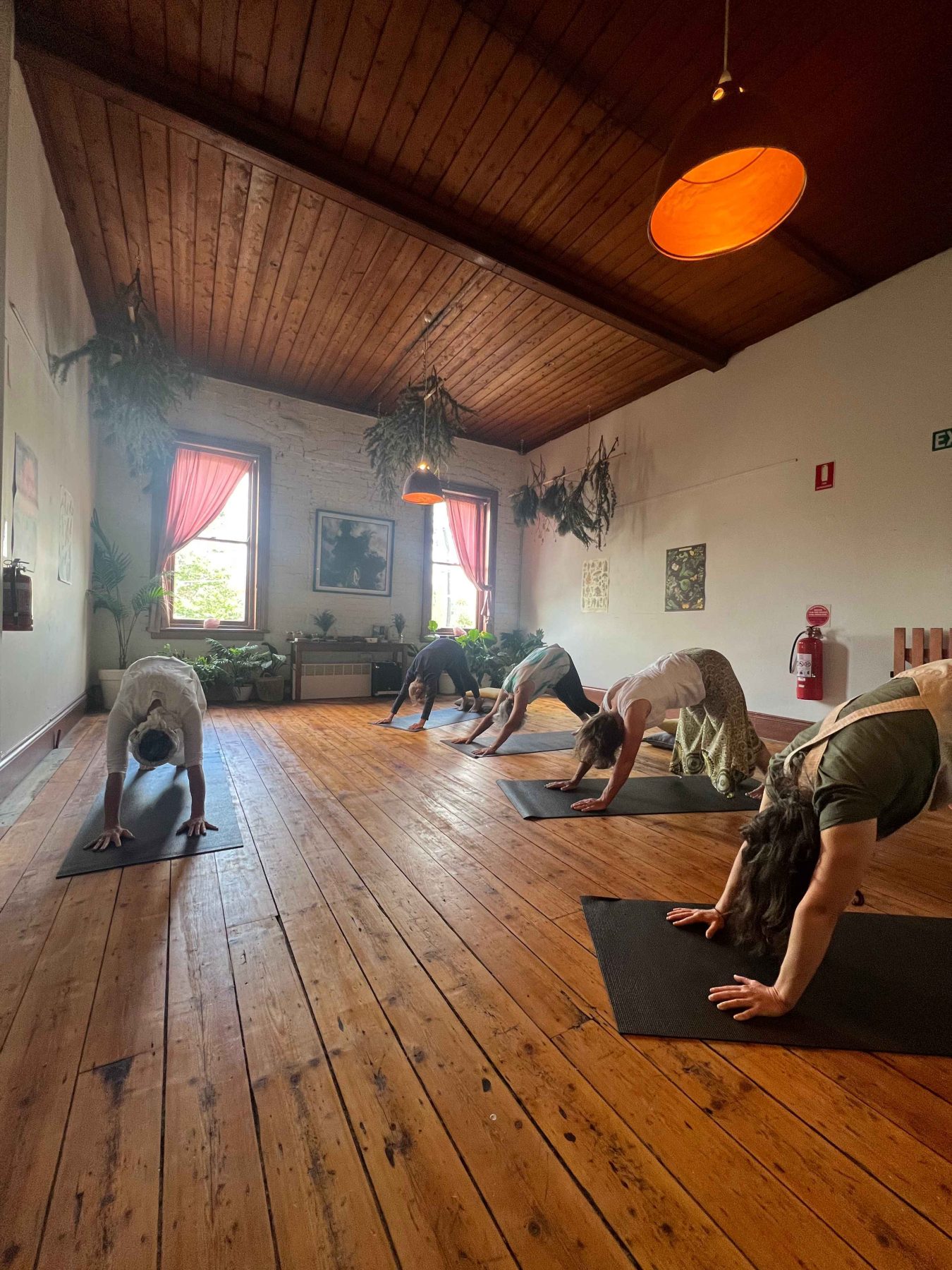
Many people imagine that they are not flexible or fit enough to attend a yoga class, however, this is rarely an issue with Kundalini. Although the practice can often be physically challenging, each individual goes at their own unique pace and participates only at the level that is safe and achievable for them. Within a class, you will find experienced yogis and beginners participating side by side, with both benefiting from the group experience.

[……]

Read more

What Is Kundalini Yoga

i9nkv

There are so many different forms of yoga out there that it’s difficult to decide which style is for you and when/where you should practice each different method. Here we’ll give you an overview of all things Kundalini Yoga so that you can understand what it is, why you should try it and what the benefits of practicing this style are.

Kundalini is a style of yoga practice that centres around pure/divine energy that is thought to be located at the base of the spine (the area also known as the base/root chakra). The belief is that we all hold this divine energy within our bodies but that it is not until it is activated and channelled upwards through our energy bodies, through the practice of Kundalini Yoga, that we are really able to engage and make the most of this pure, spiritual energy. The name Kundalini is derived from the Sanskrit word “kuṇḍalin” meaning “circular” but as a noun, it also refers to “a snake”. When you put these two words together, you begin to understand the concept of Kundalini energy representing a coiled snake at the bottom of our spines which we then release to rise up through the chakra system.

While both males and females can, of course, practice Kundalini, this style of yoga is often associated with the divine feminine.

History Of Kundalini Yoga

Kundalini was first introduced to the public in 1935 through the medium of the “Kundalini Yoga” book by Sri Swami Sivananda Saraswati. This book teaches the importance of combining Laya Yoga (the teaching of dissolution of self) with Hatha and Tantra practices in order to awaken your Kundanlini energy.

Later, in 1968 Kundalini was brought to America by Harbhajan Singh Khalsa who began teaching his own strain known as Kundalini Yoga as taught by Yogi Bhajan. This helped to popularise the practice, spanning from the United States and Europe to African, Australia and beyond!

What Is Involved In A Kundalini Practice?

Unlike sequence-based yoga like Bikram or Ashtanga, Kundalini practices can be quite different from one class to the next, depending on the group dynamic and the teacher. In general, Kundalini consists of a combination of other yogic practices such as Bhakti Yoga (devotion and chanting), Raja Yoga (meditation), Hatha Yoga (movement, breathwork and asana postures), Shakti Yoga (expressing power and energy) and Kriya Yoga (self-discipline, self-study and devotion to God) as well as some Tantric practices. It is this combination that makes Kundalini unique and which many practitioners find is the key to unlocking consciousness and building vitality.

Many Kundalini practices focus on sitting down, using breathwork, the application of bandhas (yogic locks) and physical activation of the spine to become conscious of, and then direct and control, the Kundalini energy flow. The practice also uses mantras such as Sat Nam “Truth is my identity” to focus the mind, taking you away from the unconscious chatter that is so prolific!

What Are The Benefits Of Kundalini Yoga?

As Kundalini helps to awaken the energy inside of us, the benefits of the practice are vast and varied and each person can experience different feelings and emotions. Depending on where you are on your spiritual path, you may experience feelings of peace and bliss, open channels to psychic encounters, increase compassion and empathy and even heighten your senses. Kundalini, when practiced regularly, can also work to slow down ageing, build strength, aid creativity and increase both your IQ and emotional intelligence.

In addition to helping to clear your mind and energy pathways, Kundalini Yoga is also good at helping to detoxify the body. Using repetitive movements, you can release toxins that are stagnant in the body, waking up the lymphatic system, boosting circulation and improving digestion.

When/Where Should I Practice Kundalini Yoga?

Many yoga studios and healing centres offer a wide range of yoga styles and as such, you should be able to find a Kundalini class near you. These are usually early morning classes as Kundalini helps to bring in prana (energy) for the rest of the day and your mind is less likely to be distracted first thing in the morning. There are, however, specific Kundalini techniques that aid in winding down and sleeping, so of course, these can be practiced at night. N.B. It is recommended that you don’t eat 2-3 hours before your practice so that your mind and body are light and free to let the energy flow.

If you don’t have a yoga studio nearby that offers Kundalini classes, you might want to join a Me Time Away retreat that provides Kundalini as part of the schedule so that you can learn the basic postures, breathing patterns and mantras before starting a personal practice at home.

So, there you have it, the basic of Kundalini Yoga! This should serve as an introduction to Kundalini Yoga and will hopefully have given you some inspiration to get out there and try it for yourself. There are no requirements or limitations to starting Kundalini Yoga so there really is no excuse not to give it a go. If you don’t like it after a few sessions, hey, don’t worry you might be better suited to Ashtanga, Vinyasa or Yin yoga instead or read about the latest yoga trends.

[……]

Read more

Kundalini Yoga: Everything You Need To Know

ffh9t

Kundalini is a spiritual energy that exists in everyone. The purpose of Kundalini Yoga is to awaken this sleeping spiritual energy and allow it to rise through the central channel, located along the spine out the top of your head so that you can experience higher levels of consciousness.

Kundalini Yoga is the centuries-old scientifically proven Kundalini awakening technique that awakens your creative energies and gives you access to deeper states of meditation.

Kundalini Yoga Meditation offers many benefits like increased energy levels, improved strength, more mental clarity, balance, and improved health. Many yogis consider this form of yoga a powerful tool for self-discovery, helping them become their best every day.

Yogi Bhajan brought Kundalini Yoga to the West in 1969 after studying and teaching for many years in India. He felt Kundalini Yoga was the perfect antidote to combat modern life’s stress, tension, and anxiety.

The practice can be physically strenuous, but its effects are well worth all the effort! Here are some tips on how to get started with kundalini yoga.

What equipment will I need for Kundalini Yoga?

If you live near a studio willing to let you drop in occasionally or have friends who do kundalini yoga, attending classes will be great fun and provide invaluable instruction. However, if this isn’t an option, for now, you can begin your practice with the help of some instructional videos.

When should I practice?

For peak results, it’s best to practice early in the morning on an empty stomach, but any time is good so long as you can sit or lie comfortably for about 15 minutes.

What should I wear?

You may want to wear loose-fitting clothing that won’t restrict your movement during yoga positions. Some people prefer to work out barefoot, while others find that socks are more comfortable – try both and see what works best for you! You’ll need something soft under your head if you plan on meditating (i.e., a folded blanket or towel).

Is it possible to do too much?

Kundalini yoga can be quite physically demanding, so it’s best not to overdo anything until you are sure you are physically up for the challenge. Your first few sessions may feel tiring, but don’t worry – the more you practice, the easier it gets! If your body begins to ache or feels exhausted, make yourself some refreshing tea and take a nap – life is too short not to enjoy every moment.

What if I need to stop doing Kundalini Yoga?

If something comes up and makes it necessary for you to discontinue your kundalini yoga practice, don’t feel that it’s all been for nothing. The chances are that just one session will have had a positive effect on your life (the most tangible effects often only become noticeable after consistent practice over some time.

If you feel the need to stop practicing or miss a session for whatever reason, then that’s fine; go back when you are able. Within time, it will become second nature.

What will I feel afterward?

You may find yourself feeling energized, focused, and relaxed all at the same time – results vary from person to person, but this is perfectly normal. You may even experience weeks or months of lethargy before anything happens (especially if you’ve come straight to kundalini yoga after years of inactivity), so don’t lose heart!

How long should I do Kundalini Yoga for?

Regular daily practice is essential if you want maximum results(and have fun while doing it). Consistency does pay off in the end – you’ll be doing yourself a favor on many levels! We recommend practicing at least 20-30 minutes each day.

Wrapping Up!

As you can see, kundalini yoga is a fantastic way to start the day or unwind after a stressful day at the office. By practicing regularly, you will become more confident and have less emotional baggage weighing you down. This form of yoga ensures you live life fully!

[……]

Read more

Book Bolt Software